
Neddy's Black Box
January 30, 1789
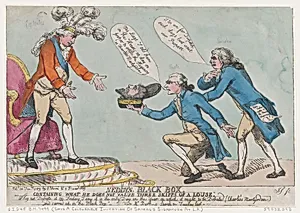
Medium
Hand-colored etching and aquatint
Dimensions
Sheet: 9 1/8 × 13 1/16 in. (23.1 × 33.1 cm)
Classification
Prints
Department
Drawings and Prints
Museum
Metropolitan Museum of Art, New York, NY
Credit
The Elisha Whittelsey Collection, The Elisha Whittelsey Fund, 1959
Accession Number
59.533.293
Rights
Public Domain
Tags
Art Historical Context
Thomas Rowlandson's *Neddy's Black Box (1789) is a quintessential example of late 18th-century British satire, as a hand-colored etching andatint. Measuring just over 9 by 13 inches, this print from the Metropolitan Museum of Art's Elisha Whittelsey Collection captures Rowlandson's signature wit and caricatured style. Known for his lively, exaggerated depictions of society, Rowlandson often skewered politicians, social climbers, and everyday follies during the Georgian era, when printed satires proliferated as affordable commentary on public life. The work's tags—Satire, Heads, Men—highlight its focus on male figures, likely distorted in humorous or critical portraits. "Neddy's Black Box" evokes the playful yet pointed humor of the time, possibly alluding to political intrigue or personal eccentricity through its enigmatic title. Aquatint, combined with etching, allowed Rowlandson to achieve rich tonal effects and vibrant hand-coloring, making these prints pop in shop windows and drawing rooms, democratizing art criticism for a broad audience. Rowlandson's technique not only amplified visual punch but also underscored the cultural role of satire in challenging authority amid events like the French Revolution's shadow over Britain. A delightful glimpse into 1789's cheeky discourse, this piece invites visitors to chuckle at history's sharper edges.
About the Artist
Thomas Rowlandson · 1756–1827
Thomas Rowlandson (1757–1827) was an English artist and caricaturist whose satirical watercolors and prints captured the social life of Georgian Britain with unparalleled wit and technical mastery. Alongside James Gillray, he is recognized as one of the greatest British graphic artists, and his distinctive flowing line and keen observations have made his work integral to understanding late 18th an...