
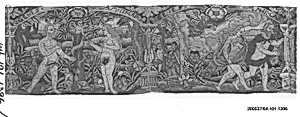
Needlepoint valance (one of three)
Unknown Artist
1604
Medium
Silk and metal thread on canvas
Dimensions
H. 9 3/4 x L. 79 1/2 inches (24.8 x 201.9 cm)
Classification
Textiles-Embroidered
Culture
Swiss
Department
European Sculpture and Decorative Arts
Museum
Metropolitan Museum of Art, New York, NY
Credit
Gift of Irwin Untermyer, 1964
Accession Number
64.101.1396
Rights
Public Domain
Tags
Art Historical Context
This exquisite needlepoint valance, crafted in Switzerland in 1604, is one of a rare surviving set of three embroidered textiles designed to adorn the top edge of a bed canopy or window. Measuring nearly 6.5 feet long but only about 10 inches high, showcases the opulence of early 17th-century domestic interiors among the elite. Woven with luxurious silk and shimmering metal threads on a canvas ground, the piece exemplifies the meticulous tent stitch technique of needlepoint, where thousands of tiny stitches create vivid, durable patterns that could withstand daily use. The imagery draws from the biblical story of Adam and Eve in the Garden of Eden, featuring the fateful serpent amid lush foliage—a potent symbol of temptation and the Fall of Man. Such moralistic motifs were popular in Protestant Switzerland during the post-Reformation era, blending religious narrative with decorative flair to elevate everyday spaces into spaces of contemplation. As a gift to the Metropolitan Museum of Art from collector Irwin Untermyer in 1964, this valance highlights the technical virtuosity of anonymous Swiss embroiderers, whose work rivaled painting in precision and splendor. It offers a glimpse into Renaissance-era craftsmanship, where textiles were prized heirlooms passed down through generations.