
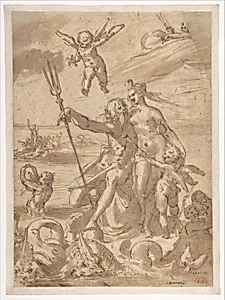
Neptune and Amphitrite
mid-16th–early 17th century
Medium
Pen and brown ink, brown wash
Dimensions
10-5/16 x 7-1/2 in. (26.2 x 19.1 cm)
Classification
Drawings
Department
Drawings and Prints
Museum
Metropolitan Museum of Art, New York, NY
Credit
Purchase, Anne and Jean Bonna Gift, 1999
Accession Number
1999.169
Tags
Art Historical Context
In the Metropolitan Museum of Art's Drawings and Prints department, Bartholomeus Spranger'sNeptune and Amphit* (mid-16th to early 17th century) captivates with its mythological allure. This pen and brown ink drawing, heightened by brown wash, measures a intimate 10-5/16 x 7-1/2 inches, showcasing the Flemish artist's mastery as a court draughtsman for Holy Roman Emperor Rudolf II in Prague. Spranger, leading Mannerist, renders the sea god Neptune entwined with his nymph bride Amphitrite amid playful putti, evoking classical tales from Ovid where Neptune woos the ocean goddess. Mannerism's ele...