
Netsuke
Unknown Artist
18th century
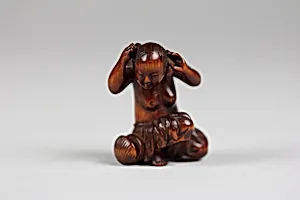
Medium
Wood
Dimensions
H. 1 7/8 in. (4.8 cm); W. 1 3/8 in. (3.5 cm); D. 1 1/4 in. (3.2 cm)
Classification
Netsuke
Culture & Period
Japan · Edo period (1615–1868)
Department
Asian Art
Museum
Metropolitan Museum of Art, New York, NY
Credit
Gift of Mrs. Russell Sage, 1910
Accession Number
10.211.1863
Rights
Public Domain
Tags
Art Historical Context
This exquisite netsuke, carved from wood in 18th-century Japan during the Edo period (161–1868), exemplifies the artistry of everyday objects in traditional Japanese culture. Netsuke were small toggles used to secure inro—lacquered pouches for carrying medicines, tobacco, or seals—to the sash of a kimono as pockets were absent from traditional garments. Crafted by an unknown artist, this piece measures just 1 7/8 inches high, showcasing the remarkable skill required for such miniature sculptures. Depicting human figures, a common motif in netsuke, it reflects the period's fascination with humor, folklore, and daily life. Wood was a favored medium for its workability, allowing intricate details like expressive faces and dynamic poses to emerge through careful carving techniques. These objects were not mere utilities but collectibles, often signed by renowned carvers, blending functionality with artistic whimsy. Now housed in the Metropolitan Museum of Art's Asian Art Department, thanks to a 1910 gift from Mrs. Russell Sage, this netsuke offers a window into Edo Japan's prosperous urban culture, where such portable treasures adorned the elite and merchants alike.