
Netsuke
Unknown Artist
19th century
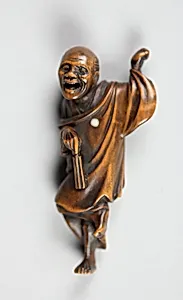
Medium
Wood
Dimensions
H. 2 3/4 in. (7 cm); W. 1 1/4 in. (3.2 cm); D. 3/4 in. (1.9 cm)
Classification
Netsuke
Culture & Period
Japan · Edo (1615–1868) or Meiji period (1868–1912)
Department
Asian Art
Museum
Metropolitan Museum of Art, New York, NY
Credit
Gift of Mrs. Russell Sage, 1910
Accession Number
10.211.2101
Rights
Public Domain
Tags
Art Historical Context
This exquisite wooden netsuke, carved in 19th-century Japan during the late Edo period (1615–1868) or early Meiji era (1868–1912), exemplifies the masterful artistry of a traditional accessory turned miniature sculpture. Measuring just 2¾ inches high, netsuke served as practical toggles to secure inro—small lacquered pouches for medicines or seals—to an obi sash, preventing them from slipping. Crafted from wood, a favored medium for its workability, this piece likely depicts male figures, a common motif reflecting everyday life, folklore, or kabuki theater characters. Artisans employed intricate carving techniques, often using boxwood or other hardwoods to achieve remarkable detail in tiny forms—think expressive faces, flowing robes, and dynamic poses that capture movement despite the object's palm-sized scale. By the 19th century, netsuke had evolved from utilitarian items into coveted collectibles among samurai, merchants, and later Western enthusiasts, symbolizing Japan's refined aesthetic of wabi-sabi: beauty in simplicity and imperfection. A gift to the Metropolitan Museum of Art from Mrs. Russell Sage in 1910, this anonymous masterpiece highlights the cultural bridge between feudal Japan and the modern world, inviting us to marvel at the skill packed into such a diminutive form.