
Netsuke
Unknown Artist
18th century
Medium
Wood
Dimensions
H. 1 1/4 in. (3.2 cm); W. 1 1/2 in. (3.8 cm)
Classification
Netsuke
Culture & Period
Japan · Edo period (1615–1868)
Department
Asian Art
Museum
Metropolitan Museum of Art, New York, NY
Credit
Gift of Mrs. Russell Sage, 1910
Accession Number
10.211.2176
Rights
Public Domain
Tags
Art Historical Context
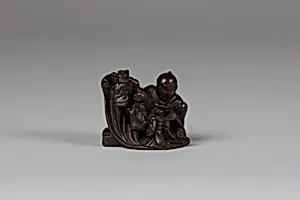
This exquisite wooden netsuke, crafted by an unknown artist during Japan's Edo period (1615–8), exemplifies the masterful miniature sculpture that defined 18th-century Japanese artistry. Measuring just 1¼ inches high and 1½ inches wide, it belongs to a tradition of toggles worn on silk kimono sashes to secure inro—small lacquered medicine or tobacco pouches. Netsuke like this one, often depicting human figures (as suggested by its "Men" motif), transformed everyday utility into high art, showcasing the wearer's refined taste. Carved from wood, a favored medium for its workability, the piece highlights the netsuke carver's skill in capturing lifelike details—expressive faces, flowing robes, and dynamic poses—within an impossibly small scale. During the prosperous Edo era, urban culture flourished, fueling demand for these intricate objects as both functional accessories and collectibles. Techniques involved precise whittling, polishing, and sometimes inlays, making each netsuke a testament to patience and ingenuity. A generous gift from Mrs. Russell Sage in 1910, this netsuke now graces the Metropolitan Museum of Art's Asian Art collection, inviting visitors to marvel at Japan's blend of form, function, and whimsy. Up close, it reveals the enduring cultural value of Edo craftsmanship.