
Netsuke
Unknown Artist
19th century
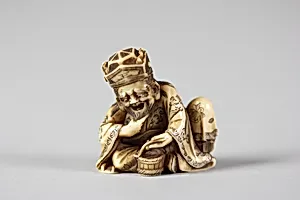
Medium
Ivory
Dimensions
H. 1 1/4 in. (3.2 cm); W. 1 1/2 in. (3.8 cm)
Classification
Netsuke
Culture & Period
Japan · Edo (1615–1868) or Meiji period (1868–1912)
Department
Asian Art
Museum
Metropolitan Museum of Art, New York, NY
Credit
Gift of Mrs. Russell Sage, 1910
Accession Number
10.211.347
Rights
Public Domain
Tags
Art Historical Context
This exquisite ivory netsuke, carved in 19th-century Japan during the late Edo (1615–1868) or early Meiji (8–1912) period, exemplifies a quintessential accessory from traditional Japanese culture. Netsuke were small toggles worn on inro (lacquered medicine cases) or pouches, securing them to kimono sashes in an era before pockets. Measuring just 1¼ inches high and 1½ inches wide, these miniature sculptures transformed everyday utility into high art, often depicting lively scenes of men—perhaps samurai, merchants, or everyday figures—frozen in dynamic poses that showcase the artist's mastery. Carved from ivory, the medium allowed for exceptional detail and a smooth, luminous finish prized by collectors. Japanese artisans employed intricate techniques like kirikabori (relief carving) or katabori (full-round sculpting), bringing human forms to life with expressive faces, flowing robes, and subtle textures. During the Edo and Meiji eras, netsuke production boomed as urban culture flourished, blending functionality with whimsy and social commentary. A gift to the Metropolitan Museum of Art from Mrs. Russell Sage in 1910, this piece highlights the global fascination with Japanese craftsmanship during the West's Japonisme craze. It invites visitors to marvel at how such tiny objects encapsulated Japan's artistic ingenuity and cultural refinement.