
Netsuke
Unknown Artist
19th century
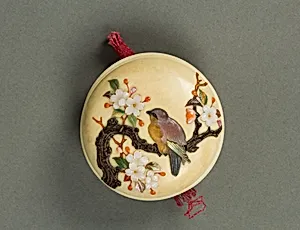
Medium
Ivory inlaid
Dimensions
H. 3/4 in. (1.9 cm); Diam. 1 3/4 in. (4.4 cm)
Classification
Netsuke
Culture & Period
Japan · Edo (1615–1868) or Meiji period (1868–1912)
Department
Asian Art
Museum
Metropolitan Museum of Art, New York, NY
Credit
Gift of Mrs. Russell Sage, 1910
Accession Number
10.211.1272
Rights
Public Domain
Tags
Art Historical Context
This delicate netsuke, a 19th-century Japanese carving from the Edo (161–1868) or Meiji (1868–2) period, exemplifies the artistry of everyday objects in traditional Japan. Netsuke served as practical toggles, securing small pouches or inro (medicine boxes) to kimono sashes in a pocketless culture. Crafted by an unknown artist, this tiny ivory piece—measuring just 3/4 inch high and 1 3/4 inches in diameter—transforms utility into whimsy, likely featuring birds as its subject, a common motif symbolizing freedom, good fortune, or seasonal beauty. The medium of inlaid ivory highlights masterful techniques: elephant ivory's creamy translucency allowed for intricate carving, while inlays of shell, horn, or other materials added vibrant contrasts and fine details, such as feathers or eyes. These sculptures were prized for their netshi (himotoshi)—the suspension holes—and often showcased virtuoso skills in miniature form, blending functionality with sculptural finesse. A gift to the Metropolitan Museum of Art from Mrs. Russell Sage in 1910, this netsuke reflects the era's growing Western fascination with Japanese art, bridging Edo-era craftsmanship with Meiji innovations amid Japan's opening to global trade. A true pocket treasure!