
Netsuke
1800 - 1850
Medium
wood (plant material)
Dimensions
2.2; 3.3; 3.2
Rights
Public Domain
About this artwork
On loan from the Royal Asian Art Society in The Netherlands (Westendorp-Osieck bequest, 1968)
Art Historical Context
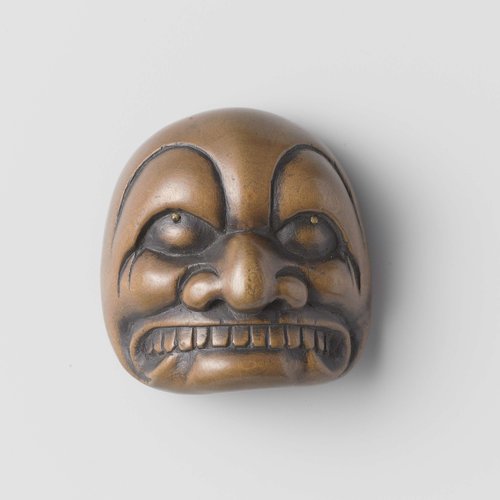
Nestled in the palm of your hand, this exquisite *netsuke* by the artist Ransen (ca. 1800–1850) exemplifies the pinnacle of Edo-period craftsmanship. Netsuke were ingenious toggles worn on traditional kimono sashes to secure small pouches or inro medicine boxes, transforming everyday utility into miniature artistry. Carved during Japan's vibrant Tokugawa era when urban culture flourished in cities like Edo (modern Tokyo), these objects captured the imagination of samurai, merchants, and collectors alike, often depicting whimsical creatures, deities, or daily life scenes. Crafted from wood—a plant-based material prized for its warmth and workability—this piece measures a mere 3.3 cm high, 3.2 cm wide, and 2.2 cm deep, highlighting the sculptor's mastery of intricate detailing in a tiny scale. Ransen's technique likely involved precise chiseling and polishing to achieve smooth contours and lifelike textures, a hallmark of netsuke carvers who rivaled ivory workers in finesse. Though its exact subject remains a delightful mystery to uncover up close, it reflects the cultural zenith of netsuke before Western influences altered Japanese dress in the Meiji era. Generously on loan from the Royal Asian Art Society in The Netherlands via the Westendorp-Osieck bequest of 1968, this treasure bridges continents and centuries, inviting us to marvel at how such diminutive works encapsulated Japan's artistic ingenuity and refined aesthetic.