
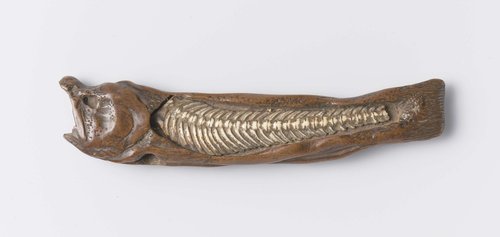
Netsuke in de vorm van een afgekloven vis
ca. 1700 - ca. 1800
Medium
wood (plant material)
Dimensions
12.5; 1.1; 2.5
Rights
Public Domain
About this artwork
Half afgekloven vis. Gesigneerd "miwa".
Art Historical Context
Behold the intricate *Netsuke in de vorm van een afgeoven vis* (Netsuke in the of a Half-Gn Fish), a masterful wooden carving attributed to the artist Miwa dating to around 1700–1800. Crafted from plant material—likely a fine hardwood like boxwood—this diminutive sculpture measures just 12.5 cm wide, 2.5 cm high, and 1.1 cm deep. Signed simply "Miwa," it the exquisite miniaturist tradition of Edo-period Japan, where netsuke served as practical toggles for securing inro pouches to kimono sashes, blending utility with artistry. Netsuke like this one emerged in 17th-century Japan as pockets were absent from traditional clothing, transforming everyday accessories into coveted collectibles. Miwa's depiction of a fish partially gnawed—perhaps evoking a moment of playful predation or natural decay—showcases the artist's skill in capturing texture and form on a tiny scale. The wood's grain enhances the realism of scales, fins, and bite marks, inviting viewers to marvel at the precision required for such detail. This piece holds cultural significance as a snapshot of Japan's ukiyo-e-inspired realism in sculpture, where nature motifs symbolized life's ephemerality. Collectors prized signed works like Miwa's for their authenticity, making this netsuke a tangible link to the vibrant merchant culture of the time. A delightful treasure for any virtual museum stroll!