
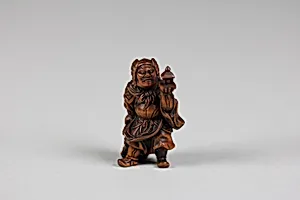
Netsuke of Bishamon
Unknown Artist
19th century
Medium
Wood
Dimensions
H. 1 1/2 in. (3.8 cm); W. 1 in. (2.5 cm); D. 3/4 in. (1.9 cm)
Classification
Netsuke
Culture & Period
Japan · Edo (1615–1868) or Meiji period (1868–1912)
Department
Asian Art
Museum
Metropolitan Museum of Art, New York, NY
Credit
Gift of Mrs. Russell Sage, 1910
Accession Number
10.211.1963
Rights
Public Domain
Tags
Art Historical Context
This exquisite netsuke of Bishamon, carved from wood in 19th-century Japan during the late Edo (1615–1868) or early Me (1868–1912) period, captures the warrior god in miniature form. Standing just 1 1/2 inches tall, this tiny sculpture showcases Bishamon, one of the Seven Lucky GodsShichifukujin), revered as a protector of warriors, guardian of the north, and bringer of wealth. Depicted as a stern male figure—fitting the "Men" taglikely armored and poised with attributes like a spear or treasure pagoda, it embodies the fusion of functionality and artistry in Japanese decorative objects. Netsuke like this served a practical purpose: as toggles to secure inro (small medicine or tobacco pouches) to a kimono sash, since traditional Japanese attire lacked pockets. Crafted by an unknown artist, the wood medium allowed for intricate detailing through masterful carving techniques, such as himotoshi (cord holes) for attachment and subtle undercutting to highlight dynamic poses. These pocket-sized masterpieces were collectible art, reflecting Edo-era craftsmanship amid Japan's shift toward modernization in the Meiji period. A gift to the Metropolitan Museum of Art from Mrs. Russell Sage in 1910, this netsuke highlights the global appreciation for Japanese ivories and woods. Its survival speaks to the enduring cultural value of Shinto-Buddhist deities in everyday life, inviting visitors to marvel at how such diminutive works packed divine power and technical brilliance.