
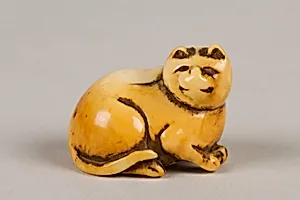
Netsuke of Cat
Unknown Artist
19th century
Medium
Ivory
Dimensions
H. 1 in. (2.5 cm); W. 1 1/4 in. (3.2 cm); D. 7/8 in. (2.2 cm)
Classification
Netsuke
Culture & Period
Japan · Edo (1615–1868) or Meiji period (1868–1912)
Department
Asian Art
Museum
Metropolitan Museum of Art, New York, NY
Credit
Gift of Mrs. Russell Sage, 1910
Accession Number
10.211.40
Rights
Public Domain
Tags
Art Historical Context
Nestled in the Metropolitan Museum of Art's Art collection, this charming *Netsuke of Cat* is a 19th-century ivory carving from Japan, likely from the late Edo period (1615–1868) or early Meiji era (1868–1912). Measuring just 1 inch high, 1¼ inches wide, and⅞ inch deep, its petite scale belies the artisan's extraordinary skill in transforming a small piece of ivory into a lifelike feline form. Gifted by Mrs. Russell Sage in 0, it exemplifies the intricate craftsmanship of anonymous Japanese sculptors who elevated everyday objects into wearable art. Netsuke were essential accessories in traditional Japanese dress, serving as toggles to secure inro (small lacquered cases for medicines or seals) to a kimono sash before modern pockets existed. Carved from ivory, this cat captures the medium's creamy translucency and durability, allowing for fine details like whiskers, fur texture, and playful posture—techniques honed over generations. During the Edo and Meiji periods, netsuke production boomed, blending functionality with whimsy and becoming coveted collectibles worldwide. Cats held special allure in Japanese culture, symbolizing good fortune, mischief, and protection against rodents. This unknown artist's depiction invites viewers to ponder the cat's alert gaze and curled form, a tiny portal to Japan's artistic heritage. Pause to admire its tactile charm up close!