
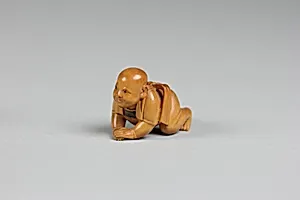
Netsuke of Crawling Child
Unknown Artist
18th century
Medium
Wood
Dimensions
L. 1 3/4 in. (4.4 cm)
Classification
Netsuke
Culture & Period
Japan · Edo period (1615–1868)
Department
Asian Art
Museum
Metropolitan Museum of Art, New York, NY
Credit
Gift of Mrs. Russell Sage, 1910
Accession Number
10.211.2032
Rights
Public Domain
Tags
Art Historical Context
Behold the charming *Netsuke of Craw Child*, a delightful 18th-century wooden carving from Japan's Edo period (16151868). Crafted an unknown artist, this sculpture—measuring just 1 3/4 inches (4.4 cm) long—captures the joyful innocence of a toddler in mid-crawl, evoking the playful energy of childhood. Netsuke like this one were essential accessories in traditional Japanese attire, serving as toggles to secure small pouches or inro (medicine boxes) to an obi sash, blending everyday utility with exquisite artistry. During the prosperous Edo era, netsuke flourished as a folk art form, often depicting scenes from daily life, animals, or mythical figures. Carved from wood, this piece showcases the meticulous himotoshi (cord hole) technique, allowing it to function practically while highlighting the carver's skill in rendering lifelike movement and texture on such a minuscule scale. Its focus on a child reflects cultural values of family and vitality, making it a poignant snapshot of Edo society's warmth and whimsy. Today, this treasured gift to the Metropolitan Museum of Art from Mrs. Russell Sage in 1910 invites visitors to appreciate the intimate artistry of Asian netsuke—tiny masterpieces that once dangled from samurai belts and merchant sashes, now symbols of Japan's enduring creative spirit.