
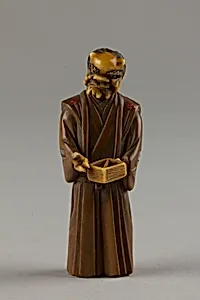
Netsuke of Demon
Unknown Artist
19th century
Medium
Wood-ivory head, hands and feet
Dimensions
H. 2 1/2 in. (6.4 cm)
Classification
Netsuke
Culture & Period
Japan · Edo (1615–1868) or Meiji period (1868–1912)
Department
Asian Art
Museum
Metropolitan Museum of Art, New York, NY
Credit
Gift of Mrs. Russell Sage, 1910
Accession Number
10.211.2354
Rights
Public Domain
Tags
Art Historical Context
Nestled in the Metropolitan Museum of Art's Art collection, this *Netsuke of Demon is a masterful 19th-century Japanese from the late Edo (1615–1868) or early Me (1868–1912) period. Standing just 2½ inches (6.4 cm) tall, netsuke like this one served as practical toggles, securing inro (small medicine or tobacco pouches) to a samurai's sash or kimono belt in an era before pockets. Gifted by Mrs. Russell Sage in 1910, it exemplifies the exquisite craftsmanship of anonymous Japanese artisans who transformed everyday objects into miniature works of art. Carved primarily from wood, with finely detailed ivory accents for the demon's head, hands, and feet, the piece highlights the netsuke maker's virtuosity in material contrast and intricate sculpting. Ivory's smooth, pale sheen evokes the creature's otherworldly skin, while wood allows for dynamic textures like fur or robes. Demons, or *oni*, from Japanese folklore—fierce guardians or tricksters—were popular netsuke subjects, blending whimsy with menace to ward off evil or amuse collectors. These tiny sculptures capture Japan's artistic fusion of utility and fantasy, reflecting a vibrant collector culture that prized such talismans. Marvel at its fierce gaze and poised stance, a portal to Edo-Meiji ingenuity!