
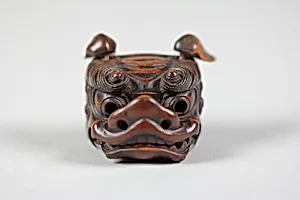
Netsuke of Lion Mask
Unknown Artist
19th century
Medium
Wood
Dimensions
H. 1 1/2 in. (3.8 cm); W. 1 5/8 in. (4.1 cm); D. 1 1/2 in. (3.8 cm)
Classification
Netsuke
Culture & Period
Japan · Edo (1615–1868) or Meiji period (1868–1912)
Department
Asian Art
Museum
Metropolitan Museum of Art, New York, NY
Credit
Gift of Mrs. Russell Sage, 1910
Accession Number
10.211.2266
Rights
Public Domain
Tags
Art Historical Context
Nestled in the Metropolitan Museum of Art's Art collection, this charming *Netsuke of Lion Mask* is a19th-century wooden carving from Japan, likely from the late Edo period (1615–1868) or early Meiji era (1868–1912). Gifted by Mrs. Russell Sage in 1910, it measures just 1 1/2 inches high, showcasing the exquisite miniaturization prized in Japanese craftsmanship. Carved from wood—a common yet demanding medium for netsuke—the piece captures the fierce yet playful visage of a lion mask, evoking the mythical shishi guardians of Japanese lore. Netsuke were ingenious toggles worn on kimono cords to secure inro pouches, evolving from practical accessories into coveted sculptures by the 19th century. Artisans demonstrated virtuosic skill in rendering details like the lion's furrowed brows, bared teeth, and flowing mane on such a tiny scale, often using techniques like staining and incising for texture and depth. This form bridged utility and artistry, reflecting Japan's blend of everyday life and spiritual symbolism. The lion mask motif draws from Noh theater and temple decorations, where lions symbolized protection against evil. Though by an unknown artist, this netsuke invites visitors to marvel at Edo-Meiji ingenuity—tiny treasures that once dangled from a samurai's sash, now timeless icons of cultural whimsy.