
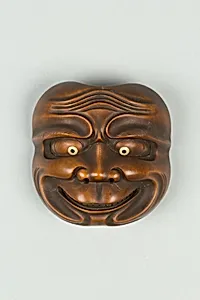
Netsuke of Noh Mask
Unknown Artist
19th century
Medium
Wood
Dimensions
H. 1 3/4 in. (4.4 cm); W. 1 3/4 in. (4.4 cm); D. 3/4 in. (1.9 cm)
Classification
Netsuke
Culture & Period
Japan · Edo (1615–1868) or Meiji period (1868–1912)
Department
Asian Art
Museum
Metropolitan Museum of Art, New York, NY
Credit
Edward C. Moore Collection, Bequest of Edward C. Moore, 1891
Accession Number
91.1.995
Rights
Public Domain
Tags
Art Historical Context
This exquisite netsuke, carved from wood in 19th-century Japan during the late Edo (1615–1868) or early Meiji (1868–1912) period, depicts a traditional Noh mask. Measuring just 1¾ inches high, wide, and ¾ inch deep, these pocket-sized sculptures served a practical purpose: as toggles to secure inro (small lacquered medicine boxes or pouches) to a wearer's kimono sash, since traditional Japanese garments lacked pockets. Crafted by an unknown artist, it exemplifies the intricate craftsmanship of netsuke, which evolved from functional objects into coveted art forms prized for their whimsy and detail. Noh theater, dating back to the 14th century, is one of Japan's oldest dramatic traditions, where performers wear carved wooden masks to embody supernatural beings, ghosts, warriors, or deities. This netsuke captures the stylized features of such a mask—perhaps evoking a fierce demon or aged sage—highlighting the cultural reverence for Noh's ritualistic grace and emotional depth. Wood was a favored medium for netsuke due to its workability, allowing carvers to achieve lifelike expressions through subtle undercutting, inlays, and polishing techniques. Part of the Edward C. Moore Collection at The Metropolitan Museum of Art, this piece reflects the global fascination with Japanese art during the 19th century. Visitors can appreciate how it bridges utility, theater, and artistry, offering a tangible glimpse into Edo-Meiji daily life and aesthetic refinement.