
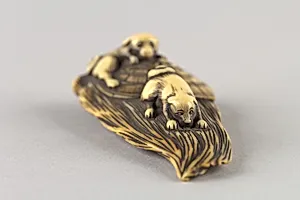
Netsuke of Puppies on a Bamboo Whisk
Unknown Artist
18th century
Medium
Ivory
Dimensions
H. 2 1/2 in. (6.4 cm); W. 1 1/4 in. (3.2 cm)
Classification
Netsuke
Culture & Period
Japan · Edo period (1615–1868)
Department
Asian Art
Museum
Metropolitan Museum of Art, New York, NY
Credit
Gift of Mrs. Russell Sage, 1910
Accession Number
10.211.506
Rights
Public Domain
Tags
Art Historical Context
Nestled in the Metropolitan Museum of Art's Art collection, this charming 18th-century ivoryuke depicts a tumble of playful puppies clambering over a bamboo whisk. Carved during Japan's Edo period (16151868), the sculpture measures just 2½ inches high and 1¼ inches wide—perfectly pocket-sized for its original purpose. Gifted by Mrs. Russell Sage in1910, it exemplifies exquisite craftsmanship of anonymous Japanese artisans who transformed humble materials into miniature masterpieces. Netsuke were essential accessories in Edo-era fashion, serving as toggles to secure inro (small medicine or tobacco pouches) to a kimono sash. Crafted from ivory, prized for its smooth translucency and fine detail, this piece showcases the carver's mastery in capturing texture: the wiry bamboo strands, fluffy puppy fur, and lively poses frozen in mid-romp. Ivory allowed for intricate undercutting and realism, turning functional objects into wearable art. These whimsical dog motifs reflect Edo Japan's delight in everyday joys and nature, with puppies evoking loyalty and mischief. As netsuke collecting boomed among samurai and merchants, such carvings bridged utility and artistry, offering a glimpse into a vibrant, prosperous era. Visitors can't help but smile at these tiny, tail-wagging wonders!