
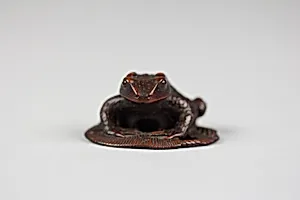
Netsuke of Toad on a Sandal
Unknown Artist
18th century
Medium
Wood
Dimensions
H. 3/4 in. (1.9 cm); W. 1 1/2 in. (3.8 cm); D. 1 1/4 in. (3.2 cm)
Classification
Netsuke
Culture & Period
Japan · Edo period (1615–1868)
Department
Asian Art
Museum
Metropolitan Museum of Art, New York, NY
Credit
Edward C. Moore Collection, Bequest of Edward C. Moore, 1891
Accession Number
91.1.1035
Rights
Public Domain
Tags
Art Historical Context
This delightful *Netsuke of Toad on a Sand*, carved from wood in 18th-century Japan during Edo period (16151868), exemplifies the exquisite miniature sculptures that served a practical purpose in daily life. Netsuke were toggles attached to inro (small lacquered cases for medicines or seals) and pouches, securing them to the silk sash of a kimono since traditional garments lacked pockets. At just 3/4 inch high, 1 1/2 inches wide, and 1/4 inches deep, this piece showcases the carver's mastery of intricate detailing on a tiny scale, capturing the toad's textured skin and whimsical perch on a wooden geta sandal. In Edo-period Japan, netsuke evolved from utilitarian objects into highly prized art forms, often depicting animals, nature, or humorous scenes. The toad motif, linked to folklore as a symbol of good fortune and transformation (echoing frog-like creatures in tales of prosperity and rain), adds playful cultural resonance. Wood was a favored medium for its workability, allowing fine undercuts and lifelike expressions that rivaled ivory counterparts. Part of the Edward C. Moore Collection bequeathed to the Metropolitan Museum of Art in 1891, this anonymous work highlights the global appeal of Japanese craftsmanship, bridging functionality with artistic whimsy for wearers and collectors alike.