
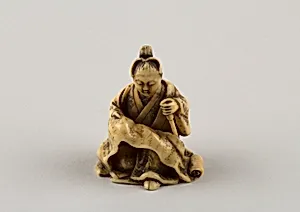
Netsuke of Woman Reading from a Scroll
Unknown Artist
19th century
Medium
Ivory
Dimensions
H. 1 1/2 in. (3.8 cm); W. 1 1/4 in. (3.2 cm)
Classification
Netsuke
Culture & Period
Japan · Edo (1615–1868) or Meiji period (1868–1912)
Department
Asian Art
Museum
Metropolitan Museum of Art, New York, NY
Credit
Gift of Mrs. Russell Sage, 1910
Accession Number
10.211.421
Rights
Public Domain
Tags
Art Historical Context
This exquisite netsuke, carved from ivory in 19th-century Japan during the Edo (1615–1868) or early Meiji (1868–1912) period, a serene woman absorbed in reading from a scroll. Measuring just 1 1/2 inches high, it exemplifies the netsuke's role as a functional yet artistic toggle. Worn on a kimono sash (obi) to secure inro pouches for medicines, pipes, or seals, netsuke evolved from practical objects into coveted miniature sculptures, showcasing the carver's mastery in a palm-sized form. Ivory's creamy translucency and fine grain made it ideal for intricate detailing, allowing the unknown artist to capture the woman's flowing robes, delicate features, and focused expression with remarkable precision. Techniques like stippling and undercutting brought texture and depth to the tiny surface, highlighting Japan's tradition of virtuoso craftsmanship in small-scale works. Culturally, the image of a woman reading evokes themes of literacy and quiet contemplation, resonant in a society where such pursuits were valued among the educated elite. A gift to the Metropolitan Museum of Art from Mrs. Russell Sage in 1910, this piece offers a window into everyday Edo-Meiji elegance and the artistry of overlooked makers.