
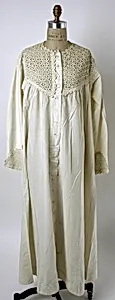
Nightgown
Unknown Artist
ca. 1850
Medium
cotton
Classification
Nightgown
Culture
American or European
Department
Costume Institute
Museum
Metropolitan Museum of Art, New York, NY
Credit
Gift of Mrs. Stuart G. Scott, 1946
Accession Number
C.I.46.62.2
Rights
Public Domain
Art Historical Context
Step into the intimate world of 19th-century bedtime attire with this delicate *Nightgown* from around 1850. Crafted from cotton by an unknown artist, likely American or European, this garment the everyday elegance of mid-Victorian underclothing. Preserved in the Metropolitan Museum Art's Costume Institute through the generous gift of Mrs. Stuart. Scott in 1946, it offers a rare glimpse into private life when such pieces were essential for modesty and comfort. Cotton, the medium here, revolutionized clothing during the Industrial Revolution. By the 1850s, advancements like the cotton gin and mechanized spinning made fine, lightweight fabrics affordable and widely available, shifting nightgowns from costly silks to practical cottons. These garments, often high-necked and long-sleeved, protected sleepwear from body oils and perspiration while reflecting era-specific silhouettes—influenced by crinolines and modest fashions. Culturally, this nightgown bridges personal and social history, highlighting women's domestic spheres and evolving standards of hygiene and femininity. Though simple, its survival underscores the Costume Institute's mission to celebrate fashion's role in daily rituals, inviting us to ponder how such unassuming items wove the fabric of 19th-century lives.