
Nikko Sho
Unknown Artist
19th century
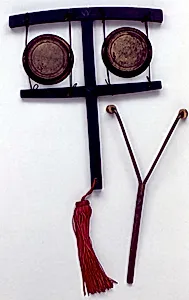
Medium
Metal, wood
Dimensions
Diam. of gong: 7.6 cm (3 in.); Height of frame: 30.5 cm (12 in.); Width: 21.6 cm (8 1/2 in.) Length of beater: 12 in.
Classification
Idiophone-Struck-gong
Culture
Japanese
Department
Musical Instruments
Museum
Metropolitan Museum of Art, New York, NY
Credit
The Crosby Brown Collection of Musical Instruments, 1889
Accession Number
89.4.82
Rights
Public Domain
Art Historical Context
Nestled in the Metropolitan Museum of Art's Crosby Brown Collection of Musical Instruments, the *Nikkō Shō* is a delicate 19th-century Japanese struck gong, exemplifying the exquisite craftsmanship of Edo-period artisans. Crafted from metal for the resonant gong—measuring just 7.6 cm (3 in.) in diameter—and framed in wood standing 30.5 cm (12 in.) tall, with a 12-inch beater, this idiophone produces a clear, piercing tone when struck. Its compact size made it portable and versatile for both ritual and performance settings. In Japanese culture, gongs like the *Nikkō Shō* held profound significance in Buddhist temple ceremonies, Noh theater, and traditional ensembles such as gagaku court music. The gong's design reflects centuries-old metallurgical techniques, where the metal's thinness and curvature amplify vibrations for a sustained, ethereal ring symbolizing spiritual awakening. Wood elements provided stability and aesthetic harmony, often carved with subtle restraint true to wabi-sabi principles of imperfection and transience. Acquired in 1889, this artifact offers visitors a tangible link to Japan's sonic heritage, inviting reflection on how sound shaped daily life and sacred rituals in the 19th century. Strike it gently in your imagination, and hear the echoes of ancient traditions.