
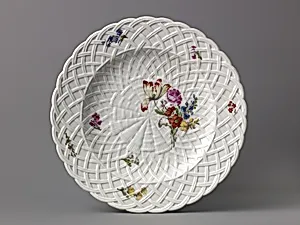
Nine dessert plates
Unknown Artist
ca. 1769
Medium
Hard-paste porcelain
Dimensions
Each: diam. 22.2 cm
Classification
Ceramics-Porcelain
Culture
German, Nymphenburg
Department
Robert Lehman Collection
Museum
Metropolitan Museum of Art, New York, NY
Credit
Robert Lehman Collection, 1975
Accession Number
1975.1.2514a-i
Rights
Public Domain
Tags
Art Historical Context
These nine elegant dessert plates, crafted around 1769 at the renowned Nymphenburg Porcelain Manufactory in Germany, exemplify the pinnacle of 18th-century European porcelain artistry. Produced in hard-paste porcelain—a technically advanced medium developed in Europe to rival Chinese imports—the plates measure 22.2 cm in diameter each and feature delicate floral decorations, as suggested by their tagging. This hard-paste formula, prized for its durability, translucency, and fine white body, allowed artisans to create thin, gleaming wares ideal for luxurious table settings. Housed in the Robert Lehman Collection at The Metropolitan Museum of Art, these plates hail from Bavaria's Nymphenburg factory, established in 1747 under princely patronage. During the Rococo era, such porcelain services were status symbols for Europe's aristocracy, showcasing virtuoso painting techniques like overglaze enameling for vibrant, naturalistic flowers. The unknown artist's handiwork reflects the manufactory's emphasis on intricate, nature-inspired motifs that brought the opulence of royal banquets to life. Though part of a larger service, these plates offer a glimpse into the cultural splendor of the Enlightenment age, where porcelain bridged Eastern innovation and Western refinement, adorning dessert courses with artistic whimsy. Visitors will appreciate their pristine preservation, a testament to enduring craftsmanship.