
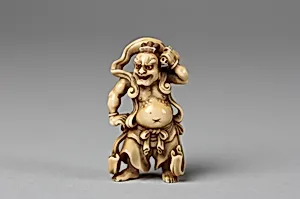
Niō Guardian
second half 19th century
Medium
Ivory
Dimensions
H. 2 1/8 in. (5.4 cm)
Classification
Netsuke
Culture & Period
Japan · Meiji period (1868–1912)
Department
Asian Art
Museum
Metropolitan Museum of Art, New York, NY
Credit
Gift of Mrs. Russell Sage, 1910
Accession Number
10.211.539
Rights
Public Domain
Art Historical Context
Behold the fierce *Niō Guardian*, a masterful ivory netsuke carved by the Japanese artist Josō in the second half of the19th century during the Meiji period (1868–1912). Standing just 2 1/8 inches (5.4 cm) tall, this diminutive sculpture captures the muscular ferocity of a Niō—one of Buddhism's wrathful temple guardians, tasked with warding off evil spirits and protecting sacred spaces. With its dynamic pose and intense expression, it embodies the protective power revered in Japanese religious art. Netsuke like this one were essential accessories in Edo and Meiji Japan, serving as toggles to secure inro pouches to kimono sashes. Crafted from ivory, a prized medium for its smooth carvability and luminous quality, Josō's work showcases the exquisite precision of netsuke artistry. Intricate detailing— from the guardian's bulging veins and flowing hair to the subtle play of light on the polished surface—highlights the technical virtuosity demanded by these tiny masterpieces. A gift to the Metropolitan Museum of Art from Mrs. Russell Sage in 1910, this piece reflects Meiji Japan's blend of traditional craftsmanship with emerging global influences, bridging samurai-era aesthetics and modernization. Visitors, marvel at how such a small object packs the might of a temple sentinel!