
No. 16: Annaka, from the series "Sixty-nine Stations of the Kisokaido (Kisokaido rokujukyu tsugi no uchi)"
c. 1835/38
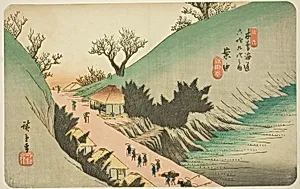
Medium
Color woodblock print; oban
Dimensions
22 × 34.9 cm (8 5/8 × 13 3/4 in.)
Classification
woodblock print
Department
Arts of Asia
Museum
Art Institute of Chicago
Accession Number
60424
Rights
Public Domain
Art Historical Context
Utagawa Hiroshige (7–1858), a master of the ukiyo-eblock print tradition, captures the scenic beauty of Japan's Kisokaido road in his renowned series *Sixty-nine Stations of theokaido*. Created around 1835–38 during the Edo period, this, No. 16: Annaka, depicts one of the 69 stations along this vital inland route connecting Edo (modern Tokyo) to Kyoto. These prints celebrated travel and nature, offering affordable glimpses of distant landscapes to urban dwellers in an era before photography. Rendered as a color woodblock print in the large oban format (22 × 34.9 cm), the artwork showcases Hiroshige's signature techniques: intricate carving on wooden blocks for vibrant, multi-layered colors (nishiki-e, or "brocade pictures") and masterful composition emphasizing atmospheric depth. Travelers and everyday scenes at Annaka station likely evoke the road's bustle, blending human activity with dramatic hills and skies—a hallmark of Hiroshige's poetic, weather-infused landscapes that influenced later Impressionists like Van Gogh. Housed in the Art Institute of Chicago's Arts of Asia collection, this print highlights ukiyo-e's cultural role in democratizing art and preserving Japan's fleeting beauty. It remains a testament to Hiroshige's enduring legacy in bridging East and West.
About the Artist
Utagawa Hiroshige · 1826–1869
Utagawa Hiroshige (1797–1858), born Andō Tokutarō, was the last great master of Japanese ukiyo-e woodblock printmaking and one of the most influential landscape artists in history. Born in Edo (modern Tokyo) into a low-ranking samurai family serving as fire wardens, Hiroshige transformed landscape printmaking into a poetic meditation on nature, weather, and everyday life. His revolutionary approac...