
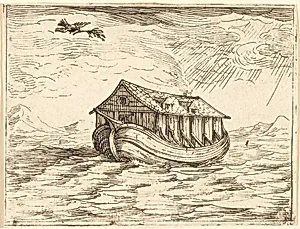
Noah's Ark
1628
Medium
etching on laid paper
Dimensions
sheet (trimmed to plate mark): 6.2 × 8.2 cm (2 7/16 × 3 1/4 in.)
Classification
Department
CG-E
Museum
National Gallery of Art, Washington, D.C.
Credit
Rosenwald Collection
Accession Number
1949.5.459
Rights
Public Domain
Art Historical Context
Jacques Callot's *Noah's Ark* (1628) is a exquisite etching on laid paper, measuring just 6.2 × 8.2 cm, part of the National Gallery of Art's Rosenwald Collection. This tiny print captures a pivotal biblical moment from the Book of Genesis, depicting the ark amid the Great Flood—a dramatic scene of divine judgment and salvation that resonated deeply in the Counter-Reformation era. Created during Callot's mature period in Florence under Medici patronage, it reflects the Baroque emphasis on emotional intensity and moral storytelling through visual narrative. As a master of etching, Callot pioneered techniques like the *échelle* method, using multiple overlapping plates to achieve unprecedented fine lines and intricate details in miniature formats. This allowed him to crowd the composition with figures, animals, and turbulent waters, transforming a small sheet into a teeming microcosm of chaos and redemption. Etchings like this were affordable reproductions, spreading religious imagery to wider audiences across Europe. Callot's work bridges artistry and devotion, showcasing his genius for scale and storytelling. Visitors to the NGA's prints department will marvel at how this pocket-sized marvel invites close inspection, revealing layers of humanity in crisis—much like the ark itself, a vessel of survival in turbulent times.
About the Artist
Jacques Callot · 1592–1635
Jacques Callot (1592–1635) was a French printmaker and draftsman from the Duchy of Lorraine, widely regarded as one of the first great artists to practice the graphic arts exclusively. His more than 1,400 etchings chronicled the breadth of 17th-century life, from Medici court festivities to the brutal realities of warfare. Callot revolutionized etching through technical innovations including the é...