
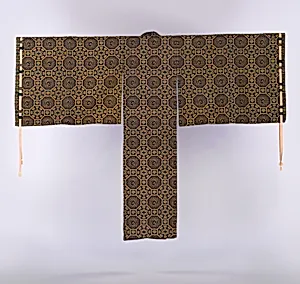
紺地蜀江模様狩衣|Noh Costume (Kariginu) with Geometric Pattern
Unknown Artist
19th century
Medium
Twill-weave silk with supplementary weft patterning
Dimensions
Overall: 61 x 83 in. (154.9 x 210.8 cm)
Classification
Costumes
Culture & Period
Japan · Edo period (1615–1868)
Department
Asian Art
Museum
Metropolitan Museum of Art, New York, NY
Credit
Edward C. Moore Collection, Bequest of Edward C. Moore, 1891
Accession Number
91.1.62
Rights
Public Domain
Art Historical Context
This exquisite Noh costume, known as a *kariginu* (hunting robe), hails from Japan's Edo period (1615–8), specifically the 19th century Worn by performers in Noh theater—a refined classical art form blending dance, drama, and music—these garments transformed actors into gods, warriors, or spirits through their dramatic silhouettes and symbolic patterns. The deep navy ground (*konji*) adorned with intricate geometric motifs evokes the elegance and restraint of Edo-era aesthetics, where opulence met subtlety. Crafted from twill-weave silk with supplementary weft patterning, the robe showcases masterful Japanese textile techniques. Twill weaving creates a subtle diagonal texture for durability and drape, while the supplementary weft—extra threads woven in for decoration—produces the bold, repeating geometric designs without compromising the fabric's integrity. At 61 x 83 inches, its generous scale allowed for sweeping movements on stage, amplifying the ethereal quality of performances. Part of the Metropolitan Museum of Art's Edward C. Moore Collection (bequest, 1891), this piece highlights Japan's textile prowess and Noh's enduring cultural legacy, inviting us to appreciate how clothing became a canvas for storytelling and spiritual expression.