
Noh mask
Unknown Artist
18th century
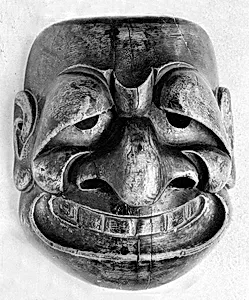
Medium
Wood
Dimensions
H. 7 5/8 in. (19.4 cm); W. 6 3/8 in. (16.2 cm)
Classification
Masks
Culture & Period
Japan · Edo period (1615–1868)
Department
Asian Art
Museum
Metropolitan Museum of Art, New York, NY
Credit
Rogers Fund, 1922
Accession Number
22.121
Rights
Public Domain
Tags
Art Historical Context
This exquisite Noh mask, carved from in 18th-century Japan during the Edo period (161–1868), exemplifies the refined artistry of traditional Japanese theater. Noh drama, a UNESCO-recognized intangible cultural heritage, masked performances blending dance, music, and poetic storytelling. These masks, often crafted by anonymous master sculptors, portray archetypal characters—from aged sages and ghosts to youthful warriors—allowing a single actor to embody supernatural or divine roles with timeless grace. The mask's compact dimensions (H. 7 5/8 in., 19.4 cm; W. 6 3/8 in., 16.2 cm) belie its profound expressiveness, achieved through subtle carving techniques. Wood, typically lightweight cypress, is meticulously shaped, painted, and sometimes gilded to capture nuanced emotions visible from the theater's distant seats. Tilting the head alters the mask's "expression" via shifting light and shadow, a genius of form-follows-function design central to Noh's aesthetic. Acquired through the Rogers Fund in 1922 and housed in the Metropolitan Museum of Art's Asian Art Department, this artifact invites visitors to ponder the Edo era's cultural flourishing, where theater bridged the spiritual and everyday worlds.