
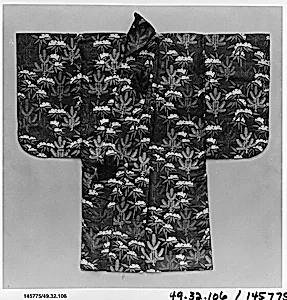
紅地若松雪持竹模様唐織|Noh Robe (Karaori) with Pattern of Young Pines and Snow-Covered Bamboo on a Red Ground
Unknown Artist
19th century
Medium
Silk twill weave with supplementary weft patterning (karaori)
Dimensions
Overall: 44 1/4 x 43 in. (112.4 x 109.2 cm)
Classification
Costumes
Culture & Period
Japan · Edo period (1615–1868)
Department
Asian Art
Museum
Metropolitan Museum of Art, New York, NY
Credit
Anonymous Gift, 1949
Accession Number
49.32.106
Rights
Public Domain
Art Historical Context
This exquisite Noh robe, known as a *karaori*, hails from Japan's Edo period (1615–1868), a time when the refined art of Noh theater flourished under the patronage of samurai elites. Crafted in the 19th century silk twill weave with supplementary weft patterning, this garment exemplifies the opulent textiles reserved for performers portraying female roles, such as elegant spirits or noblewomen. Its vibrant red groundsymbolizing passion and vitality—sets off motifs of young pines and snow-covered bamboo, evoking's austere beauty and nature's enduring resilience in Japanese aesthetics. The *karaori* technique is a marvel of weaving artistry, where extra wefts create raised, shimmering patterns that catch the light during dramatic stage movements, enhancing the robe's theatrical impact. These costumes were not mere attire but cultural treasures, often costing more than a craftsman's yearly wage, and were heirloomed across generations. Measuring about 44 by 43 inches, this robe would drape fluidly over layered kimono, transforming actors into otherworldly figures. In the world of Noh, where subtlety and symbolism reign, the pine and bamboo patterns whisper of longevity and purity—perfect for evoking ethereal grace. Donated anonymously to the Metropolitan Museum of Art in 1949, it invites us to appreciate how Edo artisans wove poetry into fabric, bridging performance, nature, and spirituality.