
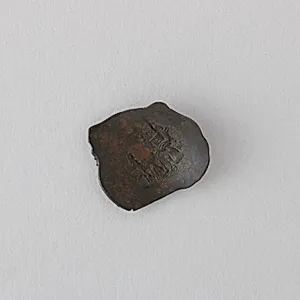
Nomisma of Alexius III (1105-1203)
Unknown Artist
late 12th–early 13th century
Medium
Bronze
Dimensions
H. 1 1/8 in. (2.9 cm); W. 7/8 in. (2.2 cm); thickness 1/4 in. (0.6 cm)
Classification
Miscellaneous-Coins and Medals
Culture
Byzantine
Department
Arms and Armor
Museum
Metropolitan Museum of Art, New York, NY
Credit
Gift of Bashford Dean, 1922
Accession Number
22.122.3
Rights
Public Domain
Tags
Art Historical Context
This petite bronze nomisma, struck during the reign of Byzantine Emperor Alexius III Angel (r. 1195–1203), a glimpse into the opulent yet turbulent world of the late 12th–early 13th century Byzantine Empire. Measuring just 1/8 inches high and 7/8 inches wide, this coin—thinner than a modern dime—was part of everyday currency in Constantinople, the empire's glittering capital. Alexius III's rule came just before the catastrophic Fourth Crusade of 1204, which the city and fractured Byzantine power, making such artifacts poignant survivors of a fading era. Byzantine coinage like this nomisma exemplified masterful minting techniques: hammered or struck from bronze dies to create finely detailed portraits and imperial symbols on both sides, asserting the emperor's divine authority and economic stability. Though gold nomismata were the gold standard, bronze issues circulated widely for trade and taxes, blending artistry with utility. These coins often featured the ruler in ceremonial garb, flanked by religious icons, reflecting Byzantium's fusion of Christian piety and imperial might. Today, this coin resides in the Metropolitan Museum of Art's Arms and Armor Department—a nod to its donor, Bashford Dean, in 1922. As a tangible link to Byzantine commerce and culture, it reminds us how "money" tagged with power shaped history. Handle with care; its small scale belies its mighty story!