
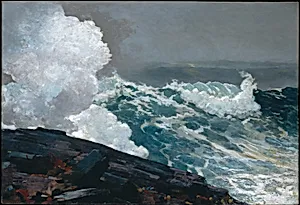
Northeaster
Winslow Homer, 1895; reworked by 1901
About this artwork
Winslow Homer's *Northeaster* (1895, reworked by 1901) the raw power of the sea in a monumental oil on canvas measuring 34½ × 50 inches. As a cornerstone of American Realism, Homer masterfully depicted dramatic seascapes, and this work exemplifies his fascination with nature's fury. The painting portrays turbulent waves crashing during a fierce storm, likely inspired by the rugged Maine coast where Homer spent his later years, evoking the relentless force of a "northeaster"—a powerful Atlantic gale. Homer's technique shines in his bold brushwork and masterful handling of light and color, rendering foaming waves and spray with visceral energy. Oil on canvas allowed him to layer thick impasto for texture, heightening the sense of motion and peril. Reworked over six years, the painting reflects Homer's perfectionism, evolving from initial sketches into a symphony of grays, whites, and blues that convey isolation amid elemental chaos. Housed in The Metropolitan Museum of Art's American Wing since its 1910 gift by George A. Hearn, *Northeaster* symbolizes America's turn-of-the-century embrace of Realism, celebrating the sublime beauty and danger of its natural landscapes. It's a timeless reminder of humanity's awe before the sea.