
Northumbrian Small-Pipe
before 1837
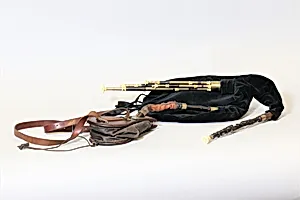
Medium
Wood, ivory, brass, leather, velvet, sheepskin
Dimensions
Overall: 12.7 x 16.5 x 52.1cm (5 x 6 1/2 x 20 1/2in.)
Classification
Aerophone-Reed Vibrated-bagpipe
Culture
British
Department
Musical Instruments
Museum
Metropolitan Museum of Art, New York, NY
Credit
Gift of Burl Ives, 1963
Accession Number
63.221.2
Rights
Public Domain
Art Historical Context
This Northumbrian small-pipe, crafted by Robert Reid before 1837, represents a refined example of British folk instrument-making from the early nineteenth century. Reid, a master pipe-maker based in Newcastle upon Tyne, played a pivotal role in standardizing the design of these bellows-blown bagpipes, which produce a softer, more melodic sound than their Highland counterparts. Favored in Northumbrian social gatherings and dance music, the instrument reflects the region’s distinct musical traditions during a period when regional identities were celebrated through vernacular arts. The pipe’s construction highlights both functionality and elegance, combining turned wooden chanters and drones with ivory mounts, brass keys, and a leather bag covered in velvet and sheepskin. These materials not only ensured durability and airtightness but also allowed for decorative refinement suited to domestic performance. As a gift from American folk singer Burl Ives, the piece now bridges centuries of transatlantic appreciation for traditional music. Visitors can imagine its gentle, reedy tones accompanying lively jigs or quiet melodies, embodying the intimate scale of Northumbrian musical life.