
Nose Ornament
Unknown Artist
1st–3rd century
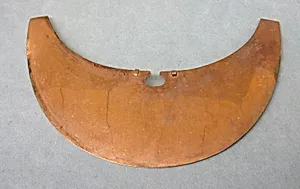
Medium
Gold
Dimensions
H. 3 3/8 x W. 5 x D. 5/8 in. (8.6 x 12.7 x 1.6 cm) Weight: 0.0037lb. (0.0017kg)
Classification
Metalwork-Ornaments
Culture
Moche
Department
Arts of Africa, Oceania, and the Americas
Museum
Metropolitan Museum of Art, New York, NY
Credit
Rogers Fund, 1996
Accession Number
1996.372.1
Rights
Public Domain
Art Historical Context
This exquisite Nose Ornament, crafted by an unknown Moche artist between the 1st and 3rd centuries, exemplifies the mastery of pre-Columbian metalwork from ancient Peru. Hailing from the Moche culture—a sophisticated society in Peru's northern coastal region known for its monumental pyramids, intricate ceramics, and elite artistry—this delicate gold piece measures just 3⅜ inches high and weighs a mere 0.0037 pounds. Its classification as metalwork-ornament highlights the Moche's reverence for personal adornments that signified social status and spiritual power. Gold held profound symbolic value for the Moche, representing divinity and the sun's radiance, often hammered from thin sheets or cast using advanced lost-wax techniques. Nose ornaments like this were worn through piercings by high-ranking warriors, priests, or rulers during rituals, enhancing their otherworldly presence. The ornament's precise dimensions and lightweight construction suggest it was designed for both comfort and visual impact, possibly evoking mythological motifs common in Moche iconography. Today, this treasure from the Metropolitan Museum of Art's Arts of Africa, Oceania, and the Americas department invites us to marvel at the Moche's technical ingenuity and cultural worldview, acquired through the Rogers Fund in 1996. It bridges us to a world where beauty and belief intertwined in gleaming gold.