
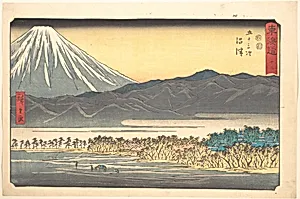
歌川広重画 東海道 十三 五十三次 沼津|Numazu, Number 13, from the series Fifty-Three Stations of the Tōkaidō (Tōkaidō gojūsan tsugi)
1847–52
Medium
Woodblock print
Dimensions
9 7/8 x 14 3/4 in. (25.1 x 37.5 cm)
Classification
Prints
Culture & Period
Japan · Edo period (1615–1868)
Department
Asian Art
Museum
Metropolitan Museum of Art, New York, NY
Credit
Henry L. Phillips Collection, Bequest of Henry L. Phillips, 1939
Accession Number
JP2875
Rights
Public Domain
Tags
Art Historical Context
Utagawa Hiroshige1797–1858), a master of ukiyo-e woodblock prints, captured the beauty of Japan's landscapes in his iconic series *Fifty-Three Stations of the Tōkaidō* (Tōkaidō gojūsan tsugi), published between 1847 and 1852. This print depicts Numazu, the thirteenth station along the historic Tōkaidō road—a vital route connecting Edo (modern Tokyo) to Kyoto during the Edo period (1615–1868). Travelers, merchants, and samurai traversed its 53 post stations, making it a symbol of mobility and national identity in isolationist Japan. In *Numazu, Number 13*, Hiroshige showcases his signature atmospheric style, blending misty mountains, lush trees, and dynamic horses into a panoramic landscape. The scene evokes the rhythm of journeying, with foreground elements drawing viewers into the vast, serene vista beyond. Woodblock printing allowed for vibrant colors and subtle gradations (bokashi technique), produced in large editions for affordable enjoyment by everyday people—a hallmark of ukiyo-e's democratic appeal. This print's cultural significance lies in romanticizing travel amid strict travel restrictions, inspiring later Western artists like Vincent van Gogh. Housed in the Metropolitan Museum of Art's Asian Art collection, it remains a window into Edo Japan's poetic harmony with nature.
About the Artist
Utagawa Hiroshige · 1826–1869
Utagawa Hiroshige (1797–1858), born Andō Tokutarō, was the last great master of Japanese ukiyo-e woodblock printmaking and one of the most influential landscape artists in history. Born in Edo (modern Tokyo) into a low-ranking samurai family serving as fire wardens, Hiroshige transformed landscape printmaking into a poetic meditation on nature, weather, and everyday life. His revolutionary approac...