
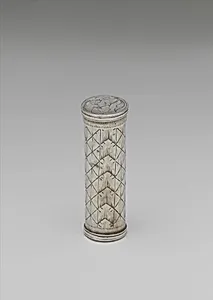
Nutmeg Grater
1705–10
Medium
Silver, steel
Dimensions
2 9/16 x 3/4 in. (6.5 x 1.9 cm); 1 oz. 1 dwt. (31.9 g)
Classification
Nutmeg Grater
Culture
American
Department
The American Wing
Museum
Metropolitan Museum of Art, New York, NY
Credit
Bequest of Alphonso T. Clearwater, 1933
Accession Number
33.120.238
Rights
Public Domain
Art Historical Context
Nestled in The American Wing of the Metropolitan Museum of Art this delicate nutmeg grater, crafted by Boston silversmith William Cow Sr. around 1705–10, exemplifies early colonial American craftsmanship. Measuring just 2 9/16 x 3/4 inches and weighing a mere 1 oz. 1 dwt., the petite object is fashioned from gleaming silver with a steel grating mechanism, perfect for its utilitarian purpose. Cowell's work reflects the refined silversmithing traditions brought from England, where such tools were status symbols in prosperous households. In the early 18th century, nutmeg—a pungent spice imported at great expense from the East Indies—was a luxury coveted by colonial elites for culinary, medicinal, and even aphrodisiac uses. Graters like this allowed users to freshly grate the hard nut, releasing its potent aroma, and underscored the era's transatlantic trade networks that fueled America's emerging material culture. The silver construction not only ensured durability and elegance but also showcased the smith's skill in shaping and possibly engraving the metal for both form and function. Bequeathed to the Met in 1933 by Alphonso T. Clearwater, this grater offers a tangible glimpse into everyday opulence of colonial life, bridging domestic history with artistic mastery in a time when American silver was coming into its own.