
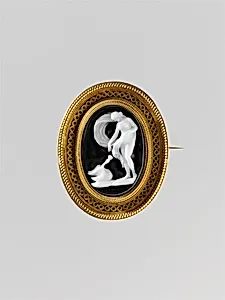
Nymph and Swan
ca. 1830–40
Medium
Agate cameo; gold mount with black enamel
Dimensions
Overall: 1 11/16 x 1 3/8 in. (4.3 x 3.4 cm); visible cameo: 26.9 x 18.6 mm
Classification
Lapidary Work-Gems
Culture
Italian, Rome
Department
European Sculpture and Decorative Arts
Museum
Metropolitan Museum of Art, New York, NY
Credit
Purchase, Assunta Sommella Peluso, Ada Peluso, and Romano I. Peluso Gift, in memory of Ignazio Peluso, 2007
Accession Number
2007.30
Rights
Public Domain
Tags
Art Historical Context
Behold the exquisite *Nymph and Swan*, masterwork of lapidary art crafted around 1830–40 in Rome by cameo engraver Benedetto Pistr and jeweler Fortunato Pio Castellani. This petite agate cameo, measuring just 26.9 x 18.6 mm and set in a gold mount adorned with black enamel, captures a graceful nymph entwined with a swan—a nod to classical mythology where such figures symbolize beauty, transformation, and divine encounters. The layered sardonyx agate allows the white figure to emerge dramatically against a darker ground, a technique perfected in antiquity and revived during the 19th-century Neo-Classical revival. Pistrucci, renowned for his gem carvings (including the iconic St. George and the Dragon on the British sovereign coin), showcases his virtuosity in the fine, high-relief details of the nymph's flowing hair and the swan's arched neck. Castellani, a leading Roman goldsmith, elevates it into wearable jewelry, likely a brooch or pendant for elite collectors. This fusion of ancient glyptic traditions with Renaissance-inspired precision reflects Rome's role as a hub for Grand Tour souvenirs, blending artistry with luxury. Housed in The Metropolitan Museum of Art's European Sculpture and Decorative Arts department, *Nymph and Swan* invites us to marvel at how tiny sculptures could embody eternal myths, bridging antiquity and the modern age in a single, shimmering gem.
About the Artist
Benedetto Pistrucci|Fortunato Pio Castellani · 1783–1855
Italian, 1783–1855, active England