
Oboe
ca. 1806–13
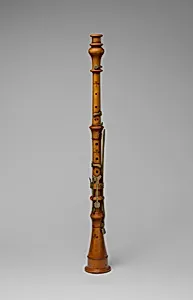
Medium
Boxwood, brass
Dimensions
Length: 556 mm., Bell diameter: 58 mm., Weight: 315 g.
Classification
Aerophone-Reed Vibrated-double reed
Culture
German
Department
Musical Instruments
Museum
Metropolitan Museum of Art, New York, NY
Credit
Museum Accession
Accession Number
X.307
Rights
Public Domain
Art Historical Context
This elegant oboe, crafted by the German maker Johann Heinrich Grenser around 1806–13, exemplifies the refined woodwind instruments of the early nineteenth century. Measuring 556 millimeters in length with a bell diameter of 58 millimeters, the instrument is fashioned from boxwood and accented with brass fittings. Its lightweight construction of just 315 grams reflects the practical demands placed on musicians of the period, who often carried their instruments between performances. As a double-reed aerophone, the oboe belongs to a family of instruments prized for their expressive, vocal-like tone. Grenser’s work emerged during a time when orchestral music was expanding across Europe, German makers were at the forefront of improving intonation and playability. The choice of boxwood, valued for its fine grain and resonant qualities, combined with durable keys, highlights both aesthetic beauty and functional innovation. Housed in the Metropolitan Museum of Art’s collection of musical instruments, this oboe offers visitors a tangible connection to the sounds that filled concert halls and drawing rooms of the Napoleonic era. Its presence underscores the museum’s commitment to preserving the material culture of music, inviting us to imagine the melodies once coaxed from its slender form.