
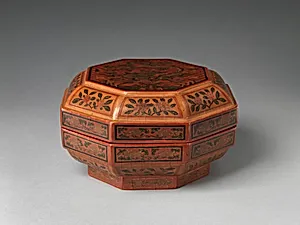
明萬曆 填漆戧金龍松紋盒|Octagonal box with “dragon pine”
Unknown Artist
dated 1595
Medium
Polychrome lacquer with filled-in and engraved gold decoration
Dimensions
H. 4 3/4 in. (12.1 cm); Diam. 8 3/4 in.(22.2 cm)
Classification
Lacquer
Culture & Period
China · Ming dynasty (1368–1644), Wanli period (1573–1620)
Department
Asian Art
Museum
Metropolitan Museum of Art, New York, NY
Credit
Gift of Florence and Herbert Irving, 2015
Accession Number
2015.500.1.11a, b
Rights
Public Domain
Art Historical Context
This exquisite octagonal lacquer box, dated 1595 from the Ming dynasty's Wan period (1573–0), exemplifies the opulent craftsmanship of late imperial China. Measuring 4¾ inches high and 8¾ inches in diameter, it features intricate "dragon pine" motifs—powerful dragons symbolizing imperial intertwined with pine trees representing longevity and resilience. Produced during the reign of Emperor Wanli, a time of economic prosperity and artistic refinement, such boxes were prized luxury items for elite scholars, officials, or the court, often used to store precious inks, seals, or medicines. The artwork's medium, polychrome lacquer with filled-in and engraved gold decoration (known as *tianqi hujin*), showcases advanced techniques honed over centuries. Artisans layered vibrant lacquers, then meticulously engraved designs and filled incisions with gold powder, creating a luminous, jewel-like effect that catches the light. This labor-intensive process, demanding precision and patience, highlights lacquerware's status as one of China's "eight treasures" of decorative arts, rivaling porcelain and jade. Housed in the Metropolitan Museum of Art's Asian Art Department as a gift from Florence and Herbert Irving (2015), this box offers a window into Ming opulence, where everyday objects became canvases for cosmic symbolism and technical virtuosity. Visitors, imagine a scholar's desk alive with its shimmering dragons!