
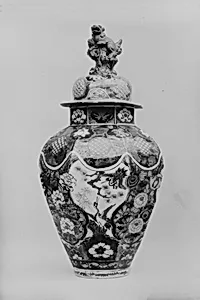
Octagonal Jar with Cover
Unknown Artist
1700
Medium
Porcelain decorated with blue under the glaze, gold and colored enamels (Arita ware, Imari type)
Dimensions
H. (with cover) 24 3/4 in. (62.9 cm)
Classification
Ceramics
Culture & Period
Japan · Edo period (1615–1868)
Department
Asian Art
Museum
Metropolitan Museum of Art, New York, NY
Credit
Gift of Mrs. V. Everit Macy, 1923
Accession Number
23.225.122a, b
Rights
Public Domain
Tags
Art Historical Context
This exquisite **Octagonal Jar with Cover crafted around 1700 during Japan's Edo period (16151868), exemplifies the pinnacle of Arita porcelain production. Hailing from the renowned Arita kilns in Saga Prefecture, this Imari-type vessel stands an impressive 24¾ inches tall with its lid. Itsagonal form—uncommon for jars—adds a geometric elegance, while decorations in cobalt blue under the glaze, paired with vibrant overglaze enamels gold, likely feature lively animal motifs, evoking nature's vibrancy. Arita ware, particularly the export-oriented Imari style, marked a golden age for Japanese ceramics. Porcelain bodies were fired at high temperatures for durability and translucency, with underglaze blue applied before glazing for permanence. Subsequent low-temperature firings allowed intricate enamel colors and gold accents to shine, blending functionality with opulence. These jars were prized in Europe, symbolizing Japan's technical mastery and contributing to global trade in luxury goods. Donated to the Metropolitan Museum of Art in 1923 by Mrs. V. Everit Macy, this piece highlights cross-cultural exchange, bridging Edo-era artistry with modern appreciation. A true treasure of Asian ceramics!