
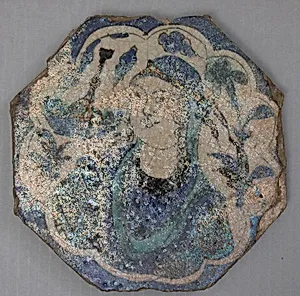
Octagonal Shaped Tile with a Woman Bust in "Kubachi" Style
Unknown Artist
late 16th–early 17th century
Medium
Stonepaste; painted in blue, turquoise, black, and white under transparent glaze
Dimensions
Diam. 8 3/8 in. (21.3 cm)
Classification
Ceramics-Tiles
Department
Islamic Art
Museum
Metropolitan Museum of Art, New York, NY
Credit
Gift of Johanna Garz, 1961
Accession Number
61.149
Rights
Public Domain
Tags
Art Historical Context
This exquisite octagonal tile, crafted in the distinctive "Kubachi", showcases a finely rendered bust of a woman, her serene features captured with graceful poise. Dating to the late 16th early 17th century it exemplifies Islamic ceramics from the Kubachi region in Dagestanmodern-day Russia), where artisans produced vibrant, intricately painted tiles for architectural decoration in mosques, palaces, and homes. Made of stonepaste—a durable, frit-based body ideal for underglaze painting—the tile features delicate cobalt blue, turquoise, black, and white hues beneath a glossy transparent glaze, creating a luminous, jewel-like effect that has endured for centuries. The Kubachi style is renowned for its technical mastery and bold figural motifs, blending Persian influences with local Caucasian traditions. Human portraits like this female bust are particularly striking, as they reflect a regional artistic freedom amid broader Islamic aniconic tendencies, often symbolizing beauty, virtue, or poetic ideals. Measuring 8⅜ inches in diameter, such tiles were typically assembled into expansive mihrab panels or wall revetments, transforming spaces into vibrant storytelling surfaces. A generous gift to the Metropolitan Museum of Art in 1961, this piece invites visitors to appreciate the anonymous artist's skill in evoking elegance through everyday materials, bridging art and architecture across cultures.