
Odd Fellows Shelf and Mirror
ca. 1850-1900
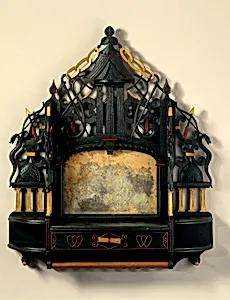
Medium
Decorative Arts-Furniture
Classification
Decorative Arts-Furniture
Department
Smithsonian Collection
Museum
Smithsonian American Art Museum
Credit
Smithsonian American Art Museum, Gift of Herbert Waide Hemphill, Jr. and museum purchase made possible by Ralph Cross Johnson
Accession Number
1986.65.84A-C
Rights
Public Domain
Tags
About this artwork
This shelf was probably made for a member of the Independent Order of Odd Fellows. Organizations like the Freemasons and Odd Fellows often decorated objects with fraternal symbols to remind members of their commitment to the brotherhood. In this piece the three pillars and the three-link chain represent the Odd Fellows motto---"Friendship, Love, and Truth." Only members of the order understood the symbolism of the serpent, staff, horn, and tent.
Art Historical Context
John Haley Bellamy crafted this striking shelf and mirror around the mid-to-late nineteenth century as a functional yet deeply symbolic of furniture. Likely commissioned for a member of the Independent Order of Odd Fellows, the work blends practical design with fraternal iconography. In an era when such organizations flourished across America, objects like this one served as quiet reminders of personal commitment to brotherhood, moral values, and community support. The carved details reveal layers of meaning intended primarily for initiates. Three pillars and a three-link chain directly reference the Odd Fellows motto of “Friendship, Love, and Truth,” while additional motifs—a serpent, staff, horn, and tent—held private significance understood only by members. As both a mirror and a display shelf, the piece would have daily reinforced these ideals within the home. Today, this decorative artwork offers visitors a vivid glimpse into the rich visual language of nineteenth-century fraternal societies and Bellamy’s skill in transforming everyday furniture into meaningful cultural statements.