
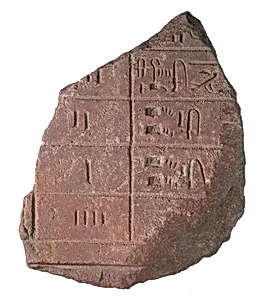
Offering list stela
Unknown Artist
ca. 1353–1336 B.C.
Medium
Red quartzite
Dimensions
H. 23 × W. 19.6 × D. 9 cm (9 1/16 × 7 11/16 × 3 9/16 in.) rows: 4 cm (1 9/16 in.)
Classification
Offering list stela
Period
New Kingdom, Amarna Period
Department
Egyptian Art
Museum
Metropolitan Museum of Art, New York, NY
Credit
Harris Brisbane Dick Fund, 1957
Accession Number
57.180.37a
Rights
Public Domain
Tags
Art Historical Context
This Offering List Stela, carved from durable red quartzite during Egypt’s New Kingdom Amarna Period (ca. 1353–1336 B.C.), served as a compact memorial tablet inscribed with hieroglyphs. Measuring just over nine inches tall, the stone’s warm reddish hue and fine grain made it especially prized for important texts meant to last for eternity. Stelae like this one typically recorded offerings of food, drink, and other provisions intended to sustain the deceased or honor deities in temple settings. In the Amarna era, such inscriptions reflected both traditional funerary beliefs and the period’s distinctive artistic and religious shifts under royal patronage. The four rows of carefully incised hieroglyphs would have listed specific items and quantities, ensuring that the named individual received perpetual nourishment in the afterlife. Red quartzite’s hardness also symbolized permanence, underscoring the Egyptians’ desire to preserve memory and ritual practice across generations. Today this modest yet eloquent piece offers visitors a direct glimpse into ancient Egyptian concerns with legacy, sustenance, and the written word’s power. Its presence in the Metropolitan Museum’s Egyptian Art collection highlights how even small monuments carried profound cultural weight.