
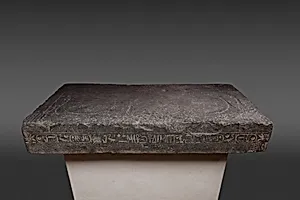
Offering Table of Seti I
Unknown Artist
ca. 1294–1279 B.C.
Medium
Granodiorite
Dimensions
L. 106 (41 3/4 in.); W. 53 (20 7/8 in.); Th. 15 cm (5 7/8 in.)
Classification
Offering table, Seti I
Period
New Kingdom, Ramesside
Department
Egyptian Art
Museum
Metropolitan Museum of Art, New York, NY
Credit
Rogers Fund, 1922
Accession Number
22.2.22
Rights
Public Domain
Art Historical Context
Step into the grandeur of ancient Egypt with the *Offering Table of Seti*, a masterful granodiorite slab from the New Kingdom's Ramesside period (. 1294–1279 B.C.). Crafted during Dynasty 19, this rectangular table—measuring 106 cm long, 53 cm wide, and 15 cm thick—honors Pharaoh Seti I, a-king renowned for his temple-building and military prowess. Such tables were essential ritual objects placed in temples or tombs, designed to receive offerings of food, drink, and incense for the gods or the royal ka (spirit). Carved from durable granodiorite, a hard igneous stone favored by Egyptian sculptors for its resistance to weathering, the table exemplifies the precision of New Kingdom stoneworking. Artisans likely incised hieroglyphic prayers and symbolic motifs around a central basin, ensuring offerings "flowed eternally" through magical inscriptions—a technique blending artistry with profound religious function. This fusion of form and faith underscores Egypt's belief in sustaining divine and royal power beyond death. Acquired through the Rogers Fund in 1922 and now housed in the Metropolitan Museum of Art's Egyptian Art department, this artifact transports visitors to the height of pharaonic splendor, revealing how everyday rituals connected mortals to eternity.