
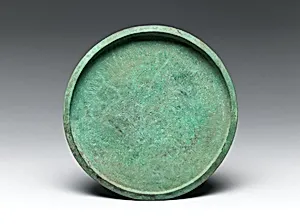
Offering Tray (Talam)
Unknown Artist
10th–11th century
Medium
Bronze
Dimensions
Diam. 10 5/8 in. (27 cm)
Classification
Metalwork
Culture
Indonesia (Java)
Department
Asian Art
Museum
Metropolitan Museum of Art, New York, NY
Credit
Samuel Eilenberg Collection, Gift of Samuel Eilenberg, 1987
Accession Number
1987.142.265
Rights
Public Domain
Art Historical Context
Nestled in the Metropolitan Museum of Art's Asian Art collection, this bronze Tray, or *Talam*, hails from 10th–11th century Java, Indonesia.ed during the height of Hindu-Buddhist kingdoms the Sailendras and Matarams, it exemplifies the sophisticated metalworking traditions of classical Javanese culture. Measuring 10⅝ inches in diameter, circular form was ideal for ritual use, balancing offerings of flowers, incense, or food during ceremonies, dances, and temple rites. tray's bronze medium highlights the era's advanced lost-wax casting techniques, allowing artisans to create intricate, durable vessels that symbolized devotion and community. As a functional yet elegant object, it bridged the spiritual and everyday worlds, often appearing in shadow puppet performances (*wayang kulit*) or bridal processions. Unknown in its maker, the *Talam* reflects Java's cosmopolitan artistry, blending local ingenuity with Indian influences via trade routes. Gifted by collector Samuel Eilenberg in 1987, this piece invites us to ponder the sensory richness of ancient rituals—imagine its cool surface warmed by flickering temple lamps, carrying prayers skyward. A testament to enduring cultural reverence, it connects visitors to Java's vibrant past.