
Ogee frame
Unknown Artist
ca. 1840–50, style 1700–1715
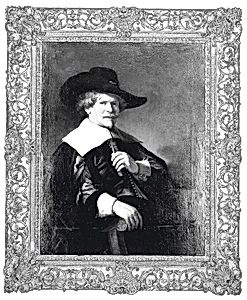
Medium
Oak lower moldings; lime upper moldings.
Dimensions
Overall: 55 1/8 × 46 1/16 in. (140 × 117 cm) Sight: 41 15/16 × 32 1/16 in. (106.5 × 81.5 cm) Rabbet: 42 15/16 × 32 3/4 in. (109 × 83.2 cm)
Classification
Frames
Culture
French
Department
Robert Lehman Collection
Museum
Metropolitan Museum of Art, New York, NY
Credit
Robert Lehman Collection, 1975
Accession Number
1975.1.2529
Rights
Public Domain
Art Historical Context
This elegant Ogee frame, crafted in France around 1840–50, exemplifies a masterful revival of early 18th-century (1700–1715) ornamental styles. The ogee profile—characterized by its distinctive S-shaped double curve—creates a rhythmic, undulating contour that was a hallmark of Baroque and Regency frame designs, adding depth and movement to surround paintings. Measuring 55 1/8 × 46 1/16 inches overall, it features oak for the sturdy lower moldings and lighter lime wood for the upper sections, a practical choice that balanced durability with fine carving potential. Though created nearly 150 years after the style it emulates, this frame reflects 19th-century nostalgia for opulent French decorative arts, possibly commissioned to reframe an older masterpiece. The use of contrasting woods highlights artisanal techniques, with lime's softness allowing intricate detailing while oak provided robust support. As part of the Robert Lehman Collection at The Metropolitan Museum of Art (acquired 1975), it stands alone as a testament to frames' evolution from mere supports to sculptural artworks in their own right. Visitors will appreciate how such frames enhanced the grandeur of salon paintings, bridging historical periods with timeless craftsmanship.