
Ogni cosa vince l'oro
ca. 1590–95
Medium
Engraving
Dimensions
8 3/8 x 5 7/8 in. (21.2 x 15 cm)
Classification
Prints
Department
Drawings and Prints
Museum
Metropolitan Museum of Art, New York, NY
Credit
Harris Brisbane Dick Fund, 1927
Accession Number
27.78.1(402)
Rights
Public Domain
Tags
Art Historical Context
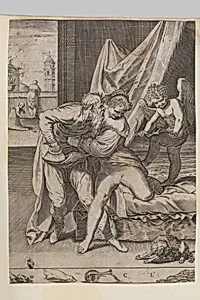
In the late 16th century,ino Carracci, a engraver from the influential Bolognese Carracci family, created *Ogni cosa vince l'oro (Gold Conquers All Things) around 1590–95. This engraving playfully twists the classical motto "Omnia vincit" (Love Conquers All), substituting gold for love to satirize the era's growing materialism during Italy's Renaissance-to-Baroque transition. Agostino, alongside brothers Annibale Ludovico, championed naturalism and emotional depth, rejecting the stylized excesses of Mannerism in favor of vivid, relatable figures. Measuring just 8 3/8 x 5 7/8 inches, this intimate print features men, women, and Cupid in a dynamic allegorical scene, where gleaming gold triumphs over affection. Engraving's meticulous technique—incising lines into a copper plate for rich tonal contrasts—allowed Agostino to capture intricate details and expressive poses, making complex ideas accessible through affordable reproductions. Prints like this spread Carracci innovations across Europe, influencing later artists. Housed in the Metropolitan Museum of Art's Drawings and Prints department (Harris Brisbane Dick Fund, 1927), it reminds us how art cleverly critiqued society, blending humor with profound cultural commentary on wealth's allure.
About the Artist
Agostino Carracci · 1557–1602
Agostino left his profession as a tailor to become an artist. His earliest works were engravings, which was an extremely profitable practice and he was famed for having attained new heights of perfection. He was also a skilled painter and collaborated with his famous relations on various commisions. Comment on works: Religious; Portraits.