
Oil Lamp
Unknown Artist
4th–7th century
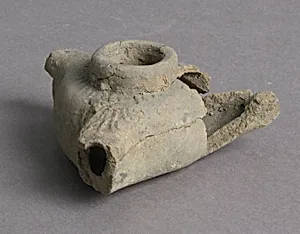
Medium
Earthenware
Dimensions
Overall: 1 1/4 x 2 9/16 x 2 3/16 in. (3.1 x 6.5 x 5.5 cm)
Classification
Ceramics
Culture
Coptic
Department
Medieval Art
Museum
Metropolitan Museum of Art, New York, NY
Credit
Rogers Fund, 1925
Accession Number
25.10.24.9
Rights
Public Domain
Art Historical Context
This unassuming earthenware oil lamp crafted by an unknown artist in Coptic Egypt between the 4th and 7th centuries, offers a glimpse into daily life during a transformative era. As Christianity took root in the Nile Valley under Roman and Byzantine rule, Coptic artisans produced these practical ceramics for households, tombs, and early churches, blending ancient Egyptian pottery traditions with emerging Christian symbolism. Made from fired clay, the lamp's compact dimensions— just 1¼ x 2⅜ x 2⅛ incheshighlight the ingenuity of wheel-thrown or molded techniques, allowing mass production of affordable lighting. Olive oil fueled the wick, casting a warm glow essential before widespread candles. Such objects underscore Coptic culture's resilience, where everyday items often featured crosses or saints, merging pharaonic heritage with faith. Acquired through the Rogers Fund in 1925 and housed in The Metropolitan Museum of Art's Medieval Art department, this survivor evokes the quiet devotion of a world lit by faith and fire.