
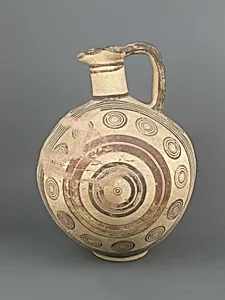
Oinochoe
Unknown Artist
Medium
Terracotta
Dimensions
H. 13 3/4 in. (35 cm)
Classification
Vases
Culture & Period
Cypriot · Iron Age
Department
Greek and Roman Art
Museum
Metropolitan Museum of Art, New York, NY
Credit
The Cesnola Collection, Purchased by subscription, 1874–76
Accession Number
74.51.491
Rights
Public Domain
Art Historical Context
This elegant oinochoe, a terracotta jug from ancient Cyprus during the Iron Age (roughly 1200– BCE), exemplifies the island's vibrant pottery traditions. Oinochoai were essential vessels in daily life and rituals, designed for pouring wine or water, often featuring a distinctive spout and handle for graceful serving. Standing at 13¾ inches (35 cm) tall, example reflects Cyprus's role as a bustling Mediterranean crossroads, where Greek, Phoenician, and Near Eastern influences blended in craftsmanship. Crafted from terracotta—fired clay valued for its durability and affordability—this vase highlights Iron Age Cypriot potters' skill in wheel-throwing and firing techniques. Such vessels were not mere utilitarian objects but symbols of cultural exchange, traded widely across the ancient world. Though decoration details are sparse, the form itself speaks to standardized shapes that aided functionality while showcasing regional aesthetics. Acquired through The Cesnola Collection—assembled by diplomat Luigi Palma di Cesnola and purchased by subscription in 1874–76—this oinochoe graces the Metropolitan Museum of Art's Greek and Roman Art department. It offers visitors a tangible link to Cyprus's Iron Age prosperity, inviting reflection on the everyday artistry of a seafaring civilization.