
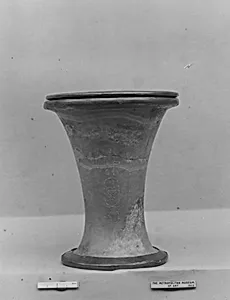
Ointment Jar
Unknown Artist
ca. 1479–1425 B.C.
Medium
Travertine (Egyptian alabaster), gold leaf
Dimensions
H. 11.7 cm (4 5/8 in.); diam. 9.3 cm (3 11/16 in.); th. of lid 0.4 cm (3/16 in.)
Classification
Jar, ointment
Period
New Kingdom
Department
Egyptian Art
Museum
Metropolitan Museum of Art, New York, NY
Credit
Fletcher Fund, 1919 (upper part and lid); Rogers Fund, 1922 (lower part)
Accession Number
26.8.33a, b
Rights
Public Domain
Art Historical Context
This exquisite ointment jar, crafted around 1479–1425 B.C. during Egypt's New Kingdom (Dynasty 18), hails from a golden age of pharaonic power and prosperity. The New Kingdom marked the height of imperial expansion under rulers like Hatshepsut Thutmose III, elite Egyptians prized finely made vessels for storing precious cosmetics, perfumes, and sacred oils used in daily rituals, beauty regimens, and religious offerings. Small and elegant at just 11.7 cm tall with a 9.3 cm diameter, this jar would have graced the toiletry collections of nobility, evoking the scents of lotus, myrrh, and unguents in sunlit palaces. Carved from travertine—known as Egyptian alabaster for its creamy translucency and cool touch—the jar showcases masterful stoneworking techniques. Artisans hollowed the stone with precision, polishing it to a soft glow that mimics marble, while the thin gold-leaf lid adds a touch of divine luxury, symbolizing the sun's eternal radiance and the pharaoh's wealth. Assembled at The Met from parts acquired in 1919 and 1922, it exemplifies how museums reunite ancient treasures, offering a tangible link to lives lived over 3,500 years ago. Though the artist remains unknown, the jar's refined form reflects the era's artistic excellence, where functionality met opulence in everyday objects. Visitors, imagine uncorking it to release fragrances fit for gods!