
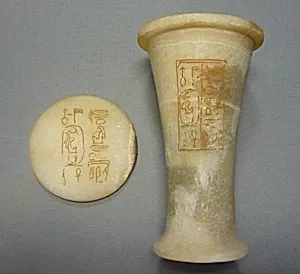
Ointment Jar
Unknown Artist
ca. 1479–1458 B.C.
Medium
Travertine (Egyptian alabaster)
Classification
Ointment jar, foundation deposit
Period
New Kingdom
Department
Egyptian Art
Museum
Metropolitan Museum of Art, New York, NY
Credit
Rogers Fund, 1927
Accession Number
27.3.409a, b
Rights
Public Domain
Tags
Art Historical Context
This exquisite ointment jar, crafted around 1479–1458 B.C. during Egypt's New Kingdom Dynasty 18, exemplifies the refined artistry of ancient Egyptian stone carvers. Fashioned from travertine—known as Egyptian alabaster—this vessel's smooth, translucent quality made it ideal for holding precious cosmetics, oils, or unguents used in daily rituals, personal adornment, and funerary practices. Acquired through the Rogers Fund in 1927, it now graces the Metropolitan Museum of Art's Egyptian Art collection. Dynasty 18 marked a golden age of Egyptian prosperity under pharaohs like Hatshepsut and Thutmose III, when such jars were not mere containers but symbols of luxury and piety. Alabaster's softness allowed skilled artisans to hollow out the stone with precision, often inscribing it with hieroglyphs—elegant symbols that might invoke divine protection or royal names, blending functionality with spiritual significance. Today, this jar offers a tactile glimpse into ancient Egyptian life, where beauty and the afterlife intertwined. Its understated elegance highlights the mastery of form over ornament, inviting visitors to appreciate the enduring allure of Pharaonic craftsmanship.