
Ojime
Unknown Artist
19th century
Medium
Ivory
Dimensions
H. 1/2 in. (1.3 cm); W. 5/8 in. (1.6 cm)
Classification
Ojime
Culture & Period
Japan · Edo period (1615–1868)
Department
Asian Art
Museum
Metropolitan Museum of Art, New York, NY
Credit
Bequest of Stephen Whitney Phoenix, 1881
Accession Number
81.1.424.81
Rights
Public Domain
Art Historical Context
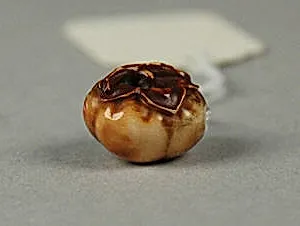
This exquisite ojime, a small ivory bead from 19th-century Japan during the Edo period (1615–1868), exemplifies the refined craftsmanship of everyday luxury items. Measuring just 1/2 inch high and 5/8 inch wide, it served as a functional yet decorative toggle, sliding along the silk cords of an *inro*—a lacquered carrying case for medicines, seals, or tobacco pouches worn suspended from the sash (*obi*) by samurai and merchants alike. Ojime like this one were essential accessories in men's fashion, blending utility with artistry in a society that prized subtlety and elegance. Carved from ivory, the medium highlights the artist's mastery of intricate techniques on a miniature scale. Ivory's smooth, lustrous quality allowed for delicate detailing, often featuring motifs from nature, mythology, or daily life, though this example's specific design remains a testament to anonymous virtuosity. During the Edo era, such objects flourished amid urban prosperity and a booming netsuke culture, reflecting Japan's isolationist prosperity under the Tokugawa shogunate. Today, this ojime graces the Metropolitan Museum of Art's Asian Art collection, a bequest of Stephen Whitney Phoenix in 1881. It invites visitors to marvel at how tiny artifacts encapsulated the sophistication of Edo Japan, where even the smallest bead told a story of cultural refinement. (198 words)